Universal Testing Machine (UTM): How to Choose the Right Capacity for Your Lab
The Universal Testing Machine (UTM) performs tensile, compressive, bend, and shear tests in a single machine. Choosing the right capacity depends on your test standards (IS 1608, IS 1786), maximum specimen size, and accuracy class required. This guide helps civil, NDT, and steel testing labs specify a UTM correctly.
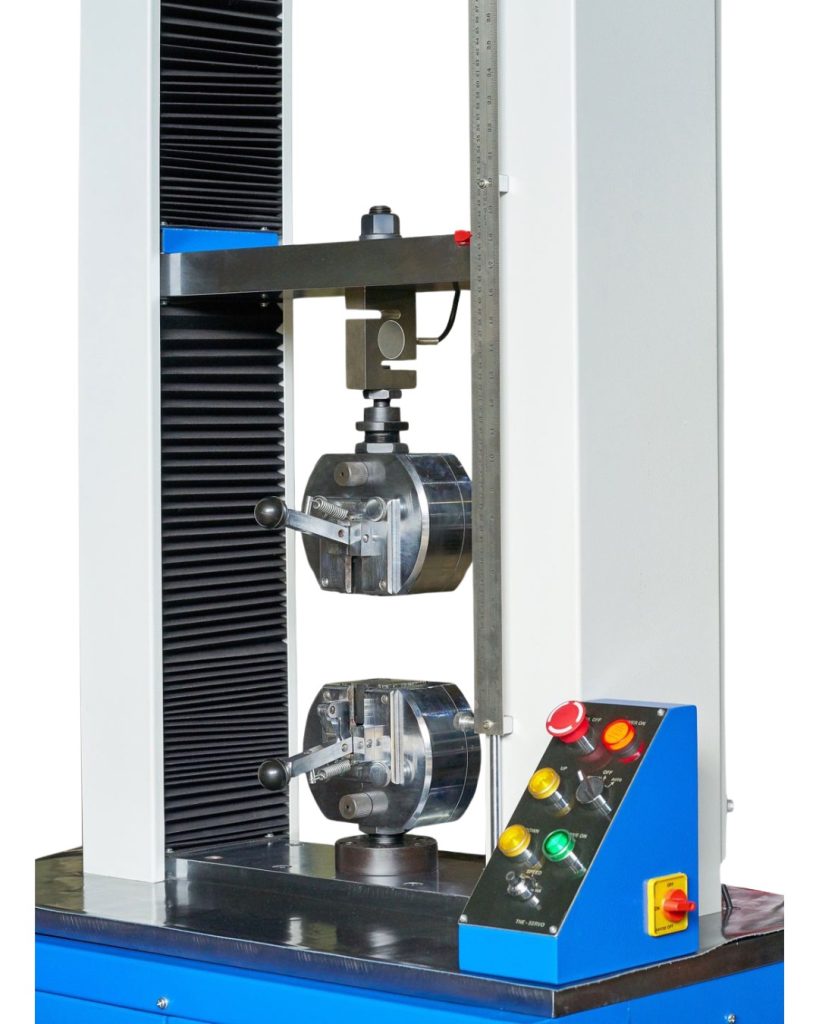
The Universal Testing Machine (UTM) is the most versatile instrument in a mechanical testing laboratory. A single machine handles tensile, compressive, bend, and shear tests on metals, concrete cores, timber, polymers, and geotextiles. Specifying the right UTM involves matching capacity, frame type, and controller to your test standards and material types.
Types of UTM
Hydraulic UTM
Uses a hydraulic actuator for load application. Suited to very high capacities (500 kN–3000 kN+), smooth load ramp for rebar and structural steel testing, and fatigue applications. Preferred in civil and structural labs.
Electromechanical UTM
Uses a motor-driven lead screw for precise displacement control. Suited to 1–300 kN range, polymer and geosynthetic testing where crosshead speed accuracy is critical. Lower maintenance and operating cost.
Capacity Selection Guide
| Capacity | Applications | Standards |
|---|---|---|
| 10–50 kN | Wire, thin sheet metal, polymers, geotextiles | IS 1608, ASTM D638 |
| 100–200 kN | Rebar 8–25 mm, structural steel sections | IS 1786, IS 2062 |
| 400–600 kN | Rebar 25–40 mm, TMT bars, concrete cores | IS 1786, IS 516 Pt.5 |
| 1000 kN+ | Structural members, anchor bolts, timber beams | IS 883, IS 11592 |
Rule: Choose a machine with capacity 20–30% above your highest expected test load for accuracy in the working range.
Key Features to Specify
Load Cell Accuracy Class
Class 1 per IS 4169 / ISO 7500-1 = error ≤ 1% of applied load. Class 0.5 = ≤ 0.5%. For NABL-accredited steel testing, Class 1 minimum is required.
Crosshead Speed Range
IS 1608 (tensile testing of steel) requires ≤ 0.25 mm/mm/min strain rate below yield. For 200 mm gauge length = 50 mm/min. Specify machines with 0.5–500 mm/min range to cover all common test speeds.
Grips and Fixtures
- Wedge action grips — rebar, round specimens (self-tightening under load)
- Flat specimen grips — sheet metal, geosynthetics, coupons
- Three-point bend fixture — beams, timber, ceramics (IS 883, IS 516 Pt.6)
- Compression platens — concrete cores, bricks, tiles
Calibration Requirements
IS 4169 requires annual calibration by a NABL-accredited calibration laboratory. The certificate must confirm the accuracy class and verified load range.
Frequently Asked Questions
What UTM capacity is needed for 32 mm Fe 500D rebar?
Cross-section of 32 mm bar = 804 mm². At UTS of 545 N/mm² (IS 1786 minimum) = 438 kN. A 600 kN UTM provides adequate capacity with safety margin.
Can a UTM perform both tensile and compression tests?
Yes — that is the defining feature. Tensile tests use the crosshead moving away from the fixed head; compression uses platens with the crosshead moving toward the fixed head.
Is 200 kN sufficient for an NABL steel testing lab?
For rebar up to 25 mm and structural steel plates up to 12 mm, yes. For 32 mm and above bars, a 400–600 kN machine is recommended to maintain accuracy throughout the working range.
View our complete Mechanical Testing Equipment range.